Reading the Alchemists’ Council: Chapter 3 (Part 2)

[UPDATE May 2019: The link to Matthew Graybosch’s commentary on the first three Chapters of The Alchemists’ Council is currently unavailable. Nonetheless, I’ve opted to retain my responses to his commentary in my “Reading The Alchemists’ Council” posts.]

In Part 1 of my response to the Chapter 3 segment of The Rebel Branch Initiate’s Guide to The Alchemists’ Council, I focused on a few key elements made by both Graybosch and Higby. Part 2 will focus primarily on one particular aspect: Dragons!

Matthew’s exploration of dragon symbolism and its potential association with the Rebel Branch is interesting and diverse. I particularly appreciated learning of the Dragon Rouge, of which I was previously unaware. This and other connections Matthew has drawn between the Rebel Branch and the Left-Hand Path throughout the Chapter 3 analysis are much appreciated given their remarkable similarity to my concept of the rebels of The Alchemists’ Council.

circleofthedragon CLICK IMAGE FOR SOURCE


For those of you interested in further exploring the connections between alchemy and dragons, you can find extensive information on this page at Circle of the Dragon. For those of you interested in a quick overview in relation to its presence in alchemical literature, see the entry for “dragon” in Lyndy Abraham’s A Dictionary of Alchemical Imagery.

Abraham Book Picassa

My concept of Dracaen, the Dragonblood Stone, and Dragon’s Blood tonic come primarily from the Dragon’s Blood (or Dragon Blood) tree. As I mentioned in an earlier post regarding the origins and pronunciation of names, most of the characters in The Alchemists’ Council are named for trees or tree-like plants. Here is the excerpt about Dracaen from that post:

DRACAEN is named for the Dragon’s Blood Tree or Dracaena cinnabari. As the narrator of this video states, the tree is “so named because of the drops of red sap which ooze out when it’s cut.” (What other name would I give the High Azoth of the dimension in which the Dragonblood Stone resides?) An array of photos of the tree and its landscape (taken by Michael Melford for National Geographic) can be found here. The pronunciation of the word dracaena can be heard here. In contrast to that pronunciation, I prefer to say the name as DRA-KANE.

dragon-tree CLICK IMAGE FOR SOURCE


This particular tree was first introduced to me by Jessica Legacy, who was a student research assistant of mine at Vancouver Island University back in 2010. (Indeed, she is one of the VIU research assistants to whom Book One is dedicated.) Jessica brought me information about Dracaena cinnabari, suggesting I consider using it as one of the tree names. As noted at Princeton Tree Care, the Dragon’s Blood tree is “named for its dark red resin, known as dragon’s blood, a substance which has been highly prized since ancient times.” The entry at Archive.org provides extensive information about the tree, stating among other details that “[t]he dragon’s blood resin of this tree exudes naturally from fissures and wounds in the bark, and is commonly harvested by widening these fissures with a knife.” References such as this to the tree’s bleeding fissures fit perfectly with my concept of the Flaw in the Stone. Thus were the names for the Rebel High Azoth (Dracaen) and the Flaw (Dragonblood Stone) born.

And one final point for today… In addition to his detailed work on dragon lore, Matthew created a Matrix/Morpheus meme that I adore–I can only hope it hits the Twitter feeds shortly! Be sure to check it out under “Dracaen’s Pitch” in the Chapter 3 segment of The Rebel Branch Initiate’s Guide to The Alchemists’ Council.

Farewell for this week, or as the rebels might say, “Long live the Dragonblood Stone!”

Cynthea and Book Covers 2From the HOME/BLOG page scroll upward to access MENU items (including BOOK REVIEWS) or downward to read the latest BLOG posts. Scroll to the bottom of the HOME/BLOG page to access the OLDER POSTS, ARCHIVES, and SEARCH.

Reading The Alchemists’ Council: Chapter 3 (Part 1)

Google Images 2

[UPDATE May 2019: The link to Matthew Graybosch’s commentary on the first three Chapters of The Alchemists’ Council is currently unavailable. Nonetheless, I’ve opted to retain my responses to his commentary in my “Reading The Alchemists’ Council” posts.]

Before delving into this week’s extraordinary Graybosch & Higby Reading, I would like to mention something that has been on my mind of late: reviews of the book. Fortunately, most of the reviews have been positive. I extend my sincere gratitude to everyone who has taken the time not only to read The Alchemists’ Council but to post a review. Of course, like any writer with a newly published book, I am thrilled with the positive reviews, but I find the less-than-positive ones can sting (bee pun intended). Notably, however, the stinging variety appear to be variations on a theme: the book is dense and difficult.

Yes, I agree.

The book is indeed dense given the philosophy and vocabulary of its subject matter and the background material upon which it is based. Alchemy is one of the most complex subjects ever presented to readers. Take a look through the material at Adam McLean’s The Alchemy Website to gain a sense of its vastness and complexity. Alternatively or additionally, take some time to watch Adam McLean’s YouTube videos in the 3-part series How to Explore Alchemical Symbolism. Mr. McLean is a preeminent scholar of alchemy whose body of work and dedication to the field are extraordinary and, often, utterly breathtaking.

Alchemy Website 2

If you indeed are “worthy to turn the page” (xiv), once you embark on reading The Alchemists’ Council, you need thereafter to consider yourself an Initiate willing to immerse yourself into a complex and challenging world. By the end of your journey, you might just find yourself–whether literally or figuratively–in possession of the philosopher’s stone.

I will end this opening segment by highlighting two recent reviews. One dubs the book “A Lacanian Fable.” In doing so, Rhonda Wilcox offered me (and other readers) not only extensive commentary but also a new way to approach the book! Thank you!

The other review, from Goodreads, I post here in its entirety:

Parker Review

Thank you, Mr. Parker! And in case you or others are wondering, I am indeed working on Book 2 at the moment.

Onward now to The Rebel Branch Initiate’s Guide to the Alchemists’ Council: Chapter 3, this week’s contribution to the Graybosch & Higby Readings. (If you have not yet read it, click on the link and take a look before continuing here.) As regular readers of this guidebook series will note, Matthew has made recent revisions to the layout. I admire the new format; for me it’s aesthetically pleasing and thus easy to read. This week’s bee image at the top of the page is also quite stunning. I certainly appreciate these bee shots as the visual link among the posts.

bee-649952_1280-640x480

When Matthew told me that he would be dividing his Chapter 3 analysis into two parts because of the extensive length, I sent him an email expressing my concern–not about his plan to divide the chapter, but about the time he must be spending dedicated to this project! He wrote me a reassuring message in return saying, among other things, “It’s a good, meaty book that deserves support.” Honestly, Mr. Graybosch, if I were to live as long as Azoth Magen Ailanthus, I would remain forever grateful for your work and support.

As with my previous response posts to Graybosch & Higby, I will not discuss every aspect of the latest edition but instead will highlight a few items that particularly resonated with me this week. To start, I must say I found Eric Higby’s story of his childhood chemistry pursuits quite endearing. Many of us can trace the hobbies of our youth to our current interests or careers. My favourite books as a child were fantasy driven: The Witch Family; A Wrinkle in Time; Jennifer, Hecate, Macbeth, William McKinley, and Me, Elizabeth (to name a few). It’s no wonder I pursued graduate work in mysticism and alchemy. It’s no wonder I became a fan and scholar of the fantasy worlds of Joss Whedon. If only every adult who ever dabbled in magic, mysticism, alchemy, or chemistry as a child would pick up a copy of The Alchemists’ Council, all would be well (to paraphrase medieval mystic and author Julian of Norwich).

Wrinkle in TIme

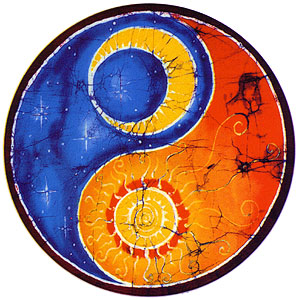
This week, both Eric and Matthew focus in part on the conflict between the Alchemists’ Council and the Rebel Branch. Eric contextualizes the conflict using Yin vs. Yang and Order vs. Chaos, concluding, “I personally believe that a balance between chaos and order is the answer.” Note, however, that Eric also admits to being swayed toward joining the rebels! (Matthew seems to have joined the rebels a while ago if the title for this reader’s guide is any indication!) Matthew discusses similar concepts in the section entitled “The Rebel Branch: Walking the Left-Hand Path.” He contextualizes the conflict using Michael Moorcock‘s model of Law vs. Chaos. Each of these comparative systems has at least one aspect in common: they, like The Alchemists’ Council, emphasize the idea that both sides must exist together. Matthew’s explanation of the Kabbalistic tree, accompanied by a glorious illustration thereof, indeed depicts almost precisely the way I visualized the dimensions when writing the book. I literally gasped when I saw it.

YinYang


I also appreciated Matthew’s comparison of Jaden’s first alchemy lesson with “the ‘hello world’ program many first-year computer science and software development students are taught to write.” Yes, all adepts–whether alchemists or computer programmers–must begin at the beginning. Jaden’s transmutation of lead into gold was in fact a late addition to the book; I added it during the substantive edits stage when my editor suggested I include a few more scenes of characters actually doing alchemy. In retrospect, I see this scene as important for the very reasons mentioned by Eric and Matthew. As Eric puts it in relation to his childhood memories, “Jaden’s adventure takes us through a mix of the immersion of those feelings”; and as Matthew puts it, “transmuting lead into gold is child’s play for the Alchemists’ Council.” Overall, the scene simultaneously allows folks to relate to the meta-narrative of the alchemist in the laboratory and suggests that the alchemy of Council dimension extends far beyond this age-old stereotype.

Alchemy Symbols


I must also give props to Matthew for one particular comment made in the section “Jaden’s Distrust and the SNAFU Principle”: “No doubt Cynthea Masson’s drawing on experience from her day job as a VIU English professor as she describes Sadira’s supervisory duties.” Ha! I laughed aloud when I read that sentence! Though Magistrate Sadira has some unique challenges as an Initiate teacher, I imagine that teachers from all dimensions–including right here in Nanaimo–can relate to certain aspects of this scene.

On a final note, I would like to remind readers that both Matthew Graybosch and Eric Higby have their own blogs, which have been up and running for years. I encourage all of you to click on their names here and check out their other posts, information, and news.

See you next time for a response to Chapter 3, Part 2. In the meantime… “Long live the Quintessence! Long live the Alchemists’ Council!” Or as the rebels say (in Book 2), “I am the Blood of the Dragon! I live as the Flaw in the Stone!”


Cynthea and Book Covers 2From the HOME/BLOG page scroll upward to access MENU items (including BOOK REVIEWS) or downward to read the latest BLOG posts. Scroll to the bottom of the HOME/BLOG page to access the OLDER POSTS, ARCHIVES, and SEARCH.

“Medieval Joss Whedon Bee Book”

Coles with Ricky

Today I would like to thank Ricky (featured in the photo) and Sarah for welcoming me to COLES bookstore at the Driftwood Mall in Courtenay. Thank you also to Maya Pozzolo for initially arranging the event.

For the first few minutes I was concerned that no one would venture over to speak with me, let alone purchase a book. These concerns proved unfounded! Coles had ordered 15 books for the occasion, and all were sold before 2 p.m.  Moreover, I spoke with several interesting and enthusiastic fantasy readers throughout my two-hour visit. Among the folk who asked me to sign their books were Chris, Ryan, Victoria, John, Erin, Rachel, Brenda, Aili, and Mona. Thanks to all of you!

My favourite moment of the visit occurred after I had described the book and answered questions from one particular patron regarding my profession. I explained that I teach medieval literature and television studies at Vancouver Island University, adding that this fall I would be offering a course on Joss Whedon’s Firefly. The woman called to her companion by saying, “Come look at this! It’s a medieval Joss Whedon bee book!” I’m not sure what Mr. Whedon would think of that description, but I certainly appreciated it!

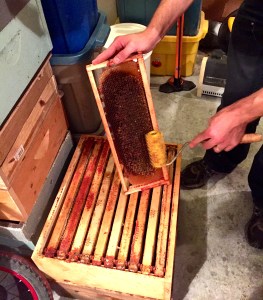
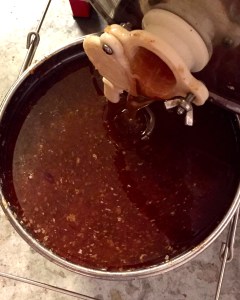
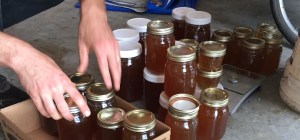
Speaking of bees…yesterday I had yet another bee-related adventure thanks to Paul and Nicole Klan. Paul gave me a glorious lesson in honey spinning–in other words, a lesson in extracting honey from honeycombs using an electric spinner. I’ve added a few pictures. The honey itself tastes sublime!

Honey 4

Honey 5

Honey 3

Honey 2

Honey 1

The bee motif of The Alchemists’ Council has certainly led me down some new and exciting avenues of knowledge. I cannot wait to see where the next road leads!


Cynthea and Book Covers 2From the HOME/BLOG page scroll upward to access MENU items (including BOOK REVIEWS) or downward to read the latest BLOG posts. Scroll to the bottom of the HOME/BLOG page to access the OLDER POSTS, ARCHIVES, and SEARCH.

Reading The Alchemists’ Council: Chapter 2

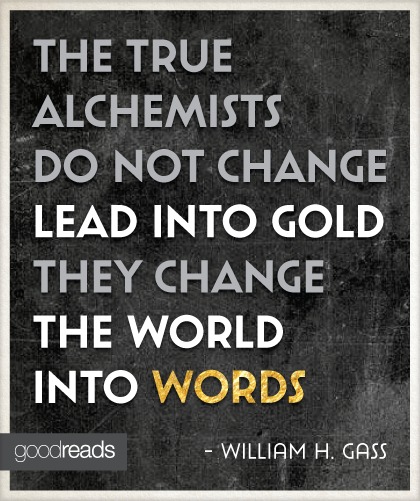
William Gass

[UPDATE May 2019: The link to Matthew Graybosch’s commentary on the first three Chapters of The Alchemists’ Council is currently unavailable. Nonetheless, I’ve opted to retain my responses to his commentary in my “Reading The Alchemists’ Council” posts.]

If you haven’t done so already, take a look at this week’s Graybosch & Higby Reading. Our two commentators have taken on Chapter 2 with extensive discussion that ranges from Stalin to Tutankhamun. Truly, I am astounded at the connections being drawn and the breadth of the analysis. As an English professor, I can certainly imagine the emerging Reader’s Guide being an extraordinarily useful resource for students studying the book. Indeed, if I were teaching it, I would assign the following essay:

  • “Choose a specific discussion topic found in any of the Graybosch & Higby Readings. Use that topic as a starting point for your research. Based on your chosen discussion topic and research, develop an argument into a persuasive essay regarding The Alchemists’ Council.”

Of course, I cannot teach one of my own books in my classes, so I can only hope that another professor at another outside world university will consider mining the Graybosch & Higby Readings for essay topics in the near future!

fountain_pen CLICK IMAGE FOR SOURCE


If I were one of the students in the hypothetical scenario above, I would choose either “Making an Unperson” or “Why Turquoise?” as my starting point. I was nodding my head in agreement all the way through Graybosch’s points in these two sections.

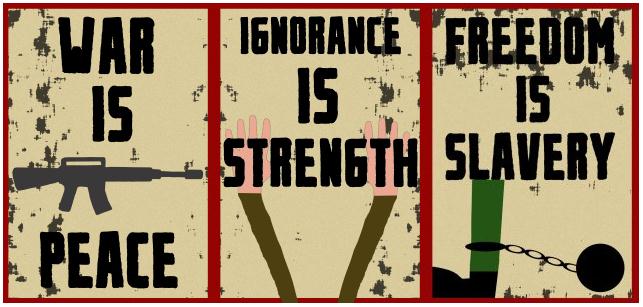
Though I did not specifically have Stalin in mind when writing about erasure, I certainly did draw on the general notion of “erasing” undesirables. Graybosch’s reference to 1984 was particularly poignant for me since one of the attendees at last week’s book launch made the identical comment. Perhaps my undergraduate reading from 1984 itself still lingers–fortunately, not yet erased–in my subconscious. (Yes, folks, I am old enough to have begun university in the year 1984 when reading lists inevitably included Orwell’s masterpiece.)

orwell-1984-propaganda CLICK IMAGE FOR SOURCE


The image above is linked to a blog entry regarding teaching 1984, which leads me to suggest another essay topic: “Compare concepts of erasure in Orwell’s 1984 to those in Masson’s The Alchemists’ Council.” Though I am currently between classes, the professor in me clearly does not shut down. (If anyone actually does assign this topic, I would love to see the resulting papers. Indeed, I would even consider posting one on this blog. Contact me!)

Before venturing on to discuss turquoise, I want to re-post here a section of a comment that I originally posted in response to a review of The Alchemists’ Council by Jana Nyman at Fantasy Literature. In the review, Ms. Nyman writes that the book “would have benefited from more clarity concerning the goals of the Rebel Branch and why the Council hates and fears them….” In order to help potential readers understand these motives, I responded as follows:

  • “[F]or me the main conflict of the novel revolves around opposing philosophies regarding free will and power. Since the era of the “primordial myth” with which the book opens, the Alchemists’ Council and the Rebel Branch have been at war. Thus the conflict is as ancient as the dimensions themselves rather than based in particular memories that any living alchemist or rebel may have. The goal of the Alchemists’ Council is to remove the Flaw in the Stone, whereas the goal of the Rebel Branch is to increase it. The Flaw in the Stone is what permits free will. If the Flaw were to be removed completely, the Council believes everyone would be saved in the dimensional equivalent of a unified afterlife. The Rebel Branch, on the other hand, wants to maintain their current existence as individuals with choice (rather than being forced into a collective “One” by the alchemists). This main conflict is explored through a variety of lenses throughout the book. Since I teach medieval literature, much of my inspiration for these conflicts came from philosophical debates on free will found in works such as Book IV of Chaucer’s Troilus and Criseyde.

In light of Graybosch’s discussion of the “unperson” and 1984, I would like to add to my explanation by saying that the main conflict also involves the abuse of free will. The Council Elders believe they have the right to stop alchemists from dissent. To do so, they erase memories of alchemists from the lower Orders. The rebels assist with this process thanks to the power of the Flaw and its inherent absence within the Stone. (Yes, this is an alchemical paradox.) Thus both sides of this conflict are engaged with the abuse. Neither side is free from blame, yet each blames the other. Thus the conflict continues unabated.

Onward to turquoise…

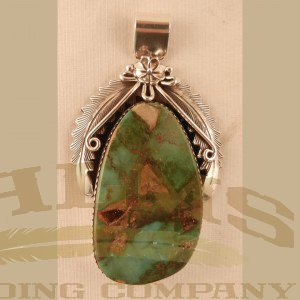
DSCN0558-300x300

The pendant featured in the image above is available through Palms Trading Company in Albuquerque, New Mexico. (Click on the image to reach a description of this particular piece.) I myself bought two turquoise pendants when I visited New Mexico in 2009 to present a paper at the Southwest Popular/American Culture Association conference. One of my pendants was purchased at Palms Trading Company; the other was purchased from a woman named Florence at the Palace of the Governors in Santa Fe. (Sound familiar? See Jaden’s purchase on page 113 of the book.) These two turquoise pendants inspired those worn by members of the Alchemists’ Council. As Graybosch suggested, I researched turquoise in particular and came to believe it would be ideal for an infusion of Quintessence. In a future post, I will discuss the concept of the pendants in more detail. For now, I encourage those of you who may be seeking one to explore the myriad of turquoise pendants available at Palms and elsewhere.

The detailed discussion of the Breach of the Yggdrasil is also one that I appreciated reading this week. As with other names I chose for events, rituals, manuscripts, and characters throughout the book, “Yggdrasil” does indeed have symbolic connections to our actual world. The ongoing links to music likewise continue to fascinate me. If not for Matthew, who describes himself as “a metalhead who writes science fantasy,” I would likely never explore these unique tracks. Thank you again, Graybosch & Higby, for opening my mind to new possibilities for the world of The Alchemists’ Council.

See you in the upcoming weeks for Chapter 3!


Cynthea and Book Covers 2From the HOME/BLOG page scroll upward to access MENU items (including BOOK REVIEWS) or downward to read the latest BLOG posts. Scroll to the bottom of the HOME/BLOG page to access the OLDER POSTS, ARCHIVES, and SEARCH.

Nanaimo is Abuzz with Bees

img_6705

What do two recent articles published in the Nanaimo News Bulletin have in common?

In one, the bees are disappearing in a book by a Nanaimo author. And in the other, the bees are reappearing in the parking lot of a Nanaimo shopping plaza. Coincidence? Perhaps. On the other hand, alchemy could be at play. After all, certain medieval poets believed their texts to comprise alchemical properties; why shouldn’t twenty-first century novelists?

Alchemy or not, bee paraphernalia was certainly a highlight of the June 2 book launch for The Alchemists’ Council, which was held at the Nanaimo North branch of the Vancouver Island Regional Library. This shot features Paul Klan setting up the honeycombs and smoker he brought from his small apiary here in Nanaimo. Thank you also to Nicole Klan for suggesting this exquisite backdrop for the reading. Not only was it beautiful, but it provided a lovely honey-smoked scent!

Honeycomb Setup

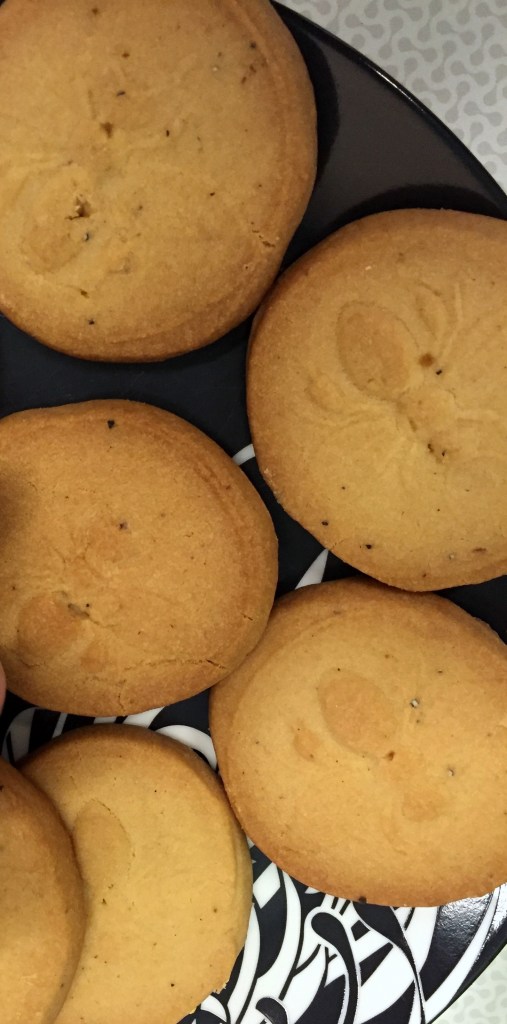
The bee-themed event did not end with the honeycomb. My friend and colleague Marni Stanley made cardamom-scented, bee-embossed cookies.

Bee Cookies 1

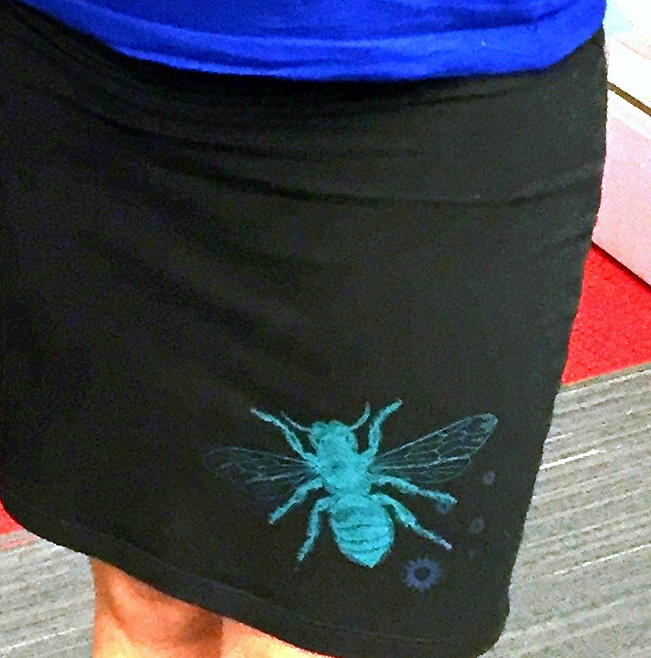
And two of the attendees–Joy Gugeler and Melissa Stephens–wore bee-printed outfits! Note the beautiful bright blue bee in the corner of Joy’s skirt!

Bee Skirt 2

And behold the stunning fabric in this close-up of Melissa’s dress!

Melissa's Dress

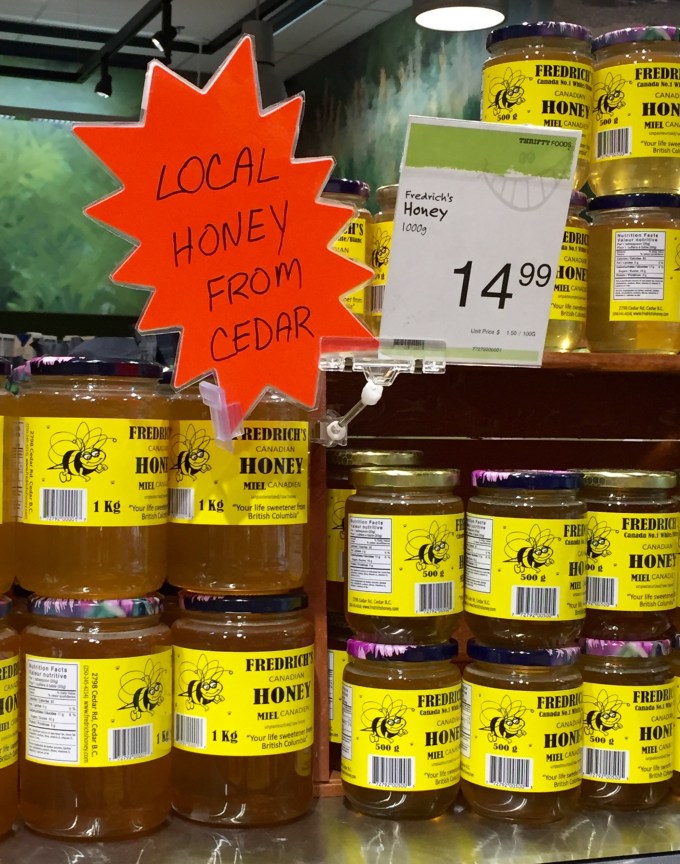
Door prizes featured jars of honey from Fredrich’s in Cedar and beeswax candles from The Hive in Duncan. Congratulations to door prize recipients Ross MacKay, Sean Gallagher, Lisa Holden, Janice Porteous, and Theresa Hartman.

Fredrich's Honey

Honey from Cedar?! I wonder if Mr. Fredrich realizes that Cedar is also the name of one of The Alchemists’ Council‘s main characters? Perhaps Lapidarian honey will be available soon right here on Vancouver Island.

Bee buttons advertising the book were also available thanks to ECW Press.

Buttons

And, of course, the book itself was the prima materia of the evening.

Cynthea at Launch

My gratitude goes out to VIRL librarian Darby Love for arranging the reading. The space at the library was perfect. I hope to see other authors reading at the Nanaimo North branch in the upcoming months. Special thanks also goes to Joy Gugeler, Farah Moosa, Sonnet L’Abbé, Tami Joseph, and Kathryn Barnwell for helping with various tasks to make this first book launch a success. Finally, thank you to everyone who attended, bought books, laughed, smiled, and asked the most intriguing and thoughtful questions during the discussion period!

Launch Audience 2

Of course, disappearing bees are only one of the mysteries of The Alchemists’ Council. So please pick up a copy at your local or online bookstore, and enjoy some summer reading! And as you read, remember to keep an eye out for reappearing bees around you. They may indeed be emerging from recently published alchemical manuscripts.


Cynthea and Book Covers 2From the HOME/BLOG page scroll upward to access MENU items (including BOOK REVIEWS) or downward to read the latest BLOG posts. Scroll to the bottom of the HOME/BLOG page to access the OLDER POSTS, ARCHIVES, and SEARCH.